Wednesday, 20 June 2018

HOW FAR IS IT THAT WAY?

President Trump's  political programme now is going much as we saw it at the beginning of his term of office .  The pattern includes : indentifying enemies , menacing them, inventing fresh enemies and doing the same with them ; after this comes Presidential conflict with helpers, staff, state organisations etc., suddenly annouced sackings, saying what will be done today, saying something different tomorrow, all geared to showing who is 'boss' and making every decision depend upon his will today rather than his perceived policy yesterday. 

 Each element in the pattern has an important thing in common : what is done and what has to be done  depends - and clearly shown to depend - not on firm policy but on the often changeable will of the President.

Staff , advisers , policy-makers and agents of government become afraid  and insecure. So do friends and allies. A development of  the pattern  has been the recent  creation of  unease, disagreement and conflict between  international allies of the USA. This is the ultimate of power seeking for a personal, rather than a state presidency.  When  this pattern is set up - as President Trump has set it up - we are forced, probably unwillingly , to look at similar histories  elsewhere  and find the way dictators rather than presidents behaved. 

Europe has plenty of examples of dictators. So has the rest of the world but we Europeans are more aware of our own. Many fellow Europeans lived in their time and with their long sad legacies.   From ancient history until our own lifetime it has been happening , Julius Caesar still works towards monarchy today and thrusts the crown aside disdainfully tomorrow, selecting  the way of life that is most profitable. Our public opinion is now being  trained to expect presidential decrees rather than presidential policies, we are learning  that international treaties can be walked away from without shame, although we struggled hard to make international treaties mean something more than selfish grabbing, we are getting used to state security displacing personal , communal and human , rights, getting  used to the slogan, a good guy with a gun is the only remedy against a bad guy with a gun, profitable arms traders selling arms to both, nuclear weapons as a necessary deterrent , diplomacy as a disposable  presidential gift, not a human right that  all of us own.  One after another  we have given  away to profiteers what we believed we had won for  good of our whole people. Our financial systems are constructed to  create poverty while carefully manipulated riches can be created for a systematically selected few . Institutions  that should be our shield and protection - and were often meant to be- are either bought over by money or rendered powerless by the threat of  removing it,  the decision-making power of small and medium-sized nations is given over to the  most financially and militarily powerful - a reversal of what we should be doing.

The empire builders are in town, every town, every state, every institution. The British empire, the French, Portuguese, German, Italian empires followed the Persians and the Romans,  the Greeks, even the Celts. In order to help the rise of yet more empires - as if we did not get our fill of their ingrowing  evil- we have not just allowed but encouraged our governments to increase conflict and do it with weapons capable of killing hundreds of thousands of men, women and children in an afternoon. The starkest  difference between empires old and new is that our present empire-builders want to control not just part of our world but all of it.

Throughout their programme of power manipulation the manipulators must know how far they can go without provoking a reaction they cannot deal with ?

Maybe the presidential separation of children from parents of immigrants crossing the US border and the angry reaction to it may show if there could be a limit to people's tolerance?
 
Image credit: FriendlyStock  https://friendlystock.com
 

Wednesday, 13 June 2018

MORALS AND LAW

People  have been making laws about abortion for thousands of years.  We made laws, changed laws, accepted and rejected legal reasons and moral principles for and against  it ; in biblical times political destruction of male children at birth, or before, for fear of the growing political power  of  the Israelites in Egypt ; in  pre-Christian  Irish law abortion as a reason for divorce, ancient Greek and Roman law  for regulating public behaviour ; in France between the two world wars authorities believing under-population would lead to more  military defeats ; not long ago important people believing in eugenics for creating public "excellence" and even the survival of poetic culture  among the "best people".

 But in all the human experience of those thousands of years of adjustments and changes in thought and law about termination of pregnancy, there can hardly have been  such a scene as that in Dublin at the result of the recent civil vote to repeal the Eighth Amendment of the Irish Constitution .
People were dancing in the street.

We can hardly  imagine the Egyptians, or the  Babylonians who seem to have inspired much of what Israelites came to believe in, or important writers like Yeats or Wells who said there were too many people in the world, dancing in the streets when  governments changed  laws about too many people to feed  or not enough warriors  to fight. 
What mattered most to those who recently danced in Dublin was a decision not about state  war or wealth but about  private rights, especially the rights of women.

A monumental  historical change, climax to a long series of campaigns and requests, demands and hopes for personal control of personal lives to take precedence, if so demanded,  over state or even long held community moralities.  Such a development shows  an upheaval of ideas about right and wrong, about rights and authority in every part of the life of all of us. If ever there was a time for careful, wise, informed, courteous public and private  discussion of such moral issues  it is now.

We can choose to think fearfully or hopefully.  
We are being  forced to think and rethink what we mean by right and wrong in our  human pro-creation.  People in the Christian tradition - not excusivley but in Europe importantly - have had for centuries a deeply held belief about human conception, calling it Pro-creation based on the belief that conceiving is a continuation of the original divine creation - a devolution of power from Creator to human beings, devolving to us the power  to continue divine creation in a humanly managed way. The divine potential to create was activated by the divine will to do so, our human potential to procreation is activated by our free will to do so too. That is the dignified belief of millions of us, that   Humans are pro-Creators not because this was written in a Sacred Book or repeated  around ancient firesides - it was  told around ancient firesides and written in sacred books because people believed  this is what they were doing when they came together in this  loving creative relationship. The conception, the love before it, the fusion and womb-life after it were sacred. This was a sacred act, not done only for selfish reasons as if its result  could be put away as neither important nor sacred.

Perhaps this ancient and spiritual  idea on which so much  of our human moral thinking has rested could have been talked about more in the recent arguments about  the Irish Constitution. Perhaps if it had been, our sense of our own sacredness and dignity might have been enhanced. It may have some place in our discussions about abortion now in the north of Ireland.
And it is we who shall decide whether it will or not.  

Many of our people are troubled by the lives we did not create willingly. Forced to carry what she did not create willingly, an assaulted  victim is in a desert of uncertainty, between different schools of thought about what is right to do. Her hurt is prolonged by fear and doubt. That is one of the most serious and profound of the problems we must  all face ; we have to discuss it with   openness, courage, generosity and courtesy , fully recognising what we have believed in the past, what we believe now and our reasons for both.   Thinking  and acting with the greatest generosity possible according to our present beliefs, seeing if there is any fresh thinking about conception that can help us, blessing with our courtesy those who support our beliefs and those who don't - recognising where we succeeded in enhancing our divine-human life and where and how we failed.  We need to  talk and write about all the insights we humans have had throughout our history, about whether  or not these insights recognised our  human  responsibility and dignity by bringing happiness and healing to all our people, especially those who have suffered through abuse or because of  our inability to face up to and remedy it.

There are other questions to solve, freedom of conscience, care of our fellow citizens to whom their generous pro-creation has brought unexpected burdens, many questions that must see us exploring how generous  to each other we can be, whatever our beliefs.  

Thursday, 24 May 2018

CHANGED (war) TIMES

Researching his family history a friend and colleague Ciarán Cahill found the following wartime report in Belfast newspaper The Northern Whig of December 2nd 1942 :

"City Priest's 30 Hours in Lifeboat.
 
The REV. HUGH CAHILL, a young Belfast priest, who was 30 hours in a life-boat after the ship in which he was coming home from Palestine was torpedoed by a U-boat, has arrived in the city.
 
Father Cahill said the ship was struck by two torpedoes about 6.30 a.m.

Time was given to the crew and passengers to abandon ship before a final torpedo sent the vessel to the bottom.

'The captain and crew were splendid', he said, 'There wasn't a trace of panic after the first few minutes'. When they had drawn away from the ship in lifeboats the submarine surfaced and the commander hailed them in perfect English. 'He told us he was sorry to do such a thing, but it was the fortune of war', added Father Cahill.
 
Second son of Mr. and Mrs. Frank Cahill, 45 Divis Street, Belfast, Father Cahill completed his studies for the priesthood in The Holy Land, where he was ordained and spent six years".

 
Thanks to Ciarán for revealing this event in his family history showing how some courtesies survived even in war.

Could the like happen in present-day warfare ?

Thursday, 26 April 2018

Real Peace


The President of Ireland Michael D. Higgins made a speech to the United Nations General Assembly a few days ago in New York.
It was a quietly brilliant speech.

The United Nations like the old League of Nations was born out of war, war is in its system. If that were not so it would never have contemplated giving major powers of decision-making, or of hindering decision-making, to their members who were biggest, potentially the richest and militarily the most powerful. But that is what they did. Being born out of war the UN was concerned with opposing aggression, and "aggression" was often defined by its most powerful members, not its weakest; with stabilising fragile ceasefires, creeping gradually towards the idea that, as one of those great powers' leaders Mr Trump says, The answer to a bad guy with a gun is a good guy with a gun; trying to stabilise power between  nations who have nuclear weapons rather than courageously and effectively working to ban  nuclear weapons altogether; supporting commercial sanctions in full knowledge that trade and loss of trade are two important causes of war not of stopping it.........
The strength of President Higgins' speech to the UN this week was that he looked above and beyond the idea of trying to beat war-makers at their own game, that is, condoning or encouraging the international arms race in the inhumane hope that the "good guy" will always have a bigger nuclear button than anyone else. He or she may well have a smaller range of moral responsibility.

Michael D Higgins did what real peace makers do,  proclaimed the difference between stopping wars and making peace. Wars are stopped when one side is defeated and we human beings are never content to stay beaten, so ending wars by defeating enemies will be a game to last forever. The United Nations has presided over  international  destruction of peace by permanent war, international tragi-comedy of powerful leaders behaving like children and  arms manufacturers forcing children to behave like soldiers. The United Nations needs, and never has had, an ideal of making peace. Managing wars, or even managing cease-fires is a tactic not an ideal.
From time to time a ray of light appears in this gloomy Nursery of Nations. Perhaps we have become too easily satisfied. It is reasonable to suggest then that if the United Nations really wanted to make peace, or knew about making peace as distinct from letting people taunt and torture each other into war and then pretending to stop  the unstoppable, it would constantly engage its members in the practical tasks of international good behaviour and sanction their members for refusing to do carry them out.  Providing enough water for the world population is a do-able task and in many places could be done for thousands of people for the price of a single missile.  So which government  will instruct its  representatives at the UN to say this, and keep saying it until even the United Nations listens and shouts with rage to the scientists and the merchants and the powerful not just to get our people out of poverty but to help our people advance into prosperity, to stop using your genius to make profits out of death, start making life out of your profits.

"The young of the world are appalled by any suggestion... that the strut of the powerful and the wielders of power can prevail in the UN Security Council........... It is an affront to humanity that, in these first decades of the twenty-first century with all its promise, at a time when we have the capacity to abolish all forms of human poverty, we share a planet with hundreds of millions who are, even as we speak here today, deprived of their most fundamental rights...........It is not nothing less than a moral outrage that our boundless capacity for creativity and innovation, and the fruits of new science and technology, are turned, not to the promotion and preservation of peace, but to the pursuit and prosecution of war"  (President of Ireland Michael D Higgins, April 24th 2018).

The war-makers have shown the United Nations how powerful they are.
The small nations of the world can be powerful too and now they must show it.

President Higgins needs our support.

Monday, 16 April 2018

GAS ATTACK WITNESS

On the day USA, French and British governments were preparing their unauthorised response to an unproven gas attack on civilians in Syria a Belfast man Jim Mc Cann was preparing to launch a book about a real gas attack on prisoners in N.Ireland that was  authorised by the British government.  Survivors of  this attack have spent nearly a half a century trying to make governments admit that the weapon was CR gas. and accept the consequences of what they did.

The survivors' account of the attack has  never been refuted and  the British government has not yet seriously tried to refute it.  But the prisoners' history of it is clear and could not be more damning:
It was in October 1974. Helicopters flew over Long Kesh/Maze prison camp a few miles from Belfast  and dropped clusters of gas-carrying devices containing the highly toxic CR gas. The British Government developed this gas in the late 1950s and early 1960s.  In March 1974 it was issued to the Long Kesh prison guards, 200 hand held spray devices were put in store there, although it is said that they failed to sell the gas to the USA. as highly dangerous, with likely cancerous and mutagenic effects. Members of the British Army, SAS, were trained to use it as a weapon from helicopters with safety to themselves. The effects of CR gas are different from the CS gas often used in N.Ireland streets. CS gas attacks eyes and lungs and people devised some protection against it. CR gas however is very different. In the Long Kesh attack of October 1974 prisoners had "the sensation of drowning", the same effect as that produced by water-boarding which was also authorised by the British Government and used from the early nineteen seventies. Water-boarding was used - and approved- in Sing Sing ,USA, prison until prison reform there about 1920 revised their normal torture procedures . It is still used by USA, British and other military.  
Jim Mc Cann and others have been working since that October 1974 to make Government admit  CR gas was indeed the weapon used in that attack. It has been a long task, not helped by government agencies. 12 to 15 % of the prisoners attacked have since  been diagnosed with cancer including leukaemia and various lung diseases. The British MOD ( Ministry of Defence, the title replacing that of Ministry of War in the governmental campaigns to make all their military attacks abroad appear  "necessary for national security").
After the October 1974 attack prisoners were blood-tested from samples taken by the MOD . But the  former prisoners have found, not surprisingly, that their " medical records have disappeared" especially those for 1974. And no-one is now admitting they were the persons even taking the blood samples, let alone analysing them!
Jim's book is available in bookshops including that of Irish Republican History Museum Conway Street  Belfast BT 13 2DE., Springhill Community House and  local shops.
Meanwhile somebody somewhere will certainly see those one hundred and five  missiles fired against Syria as partly - perhaps mostly - a commercial operation to show what percentage of the manufacturers' interceptors will actually bring missiles down. Expensive demo, unethical, yes, but the arms business is not short of a few dollars, pounds and euros for advertising.
Including our money.

Tuesday, 10 April 2018

Undiplomatic ?


Recently the government in Dublin decided to expel one Russian Diplomat. Mr Varadkar the Taoiseach authorised the expulsion. This, like the expulsion of Russian diplomats from other countries was in solidarity with other members of the European Union and the USA following the attack on  two people in an English city.  It was a show of solidarity rarely seen in international affairs, done with speed and confidence. Not however with sufficient evidence that it should have been done.

It might have been expected that a government in Dublin would have demanded sufficient evidence of Russian involvement in the attack , evidence it could present publicly to the Dáil and to the people.  Now the injured people have been taken away to some place where security and secrecy are assured.

Those of us with long memories recall how on some historic occasions government in Dublin was not so cooperative to requests which were really demands. When Mr De Valera was creating a new Constitution for the state he came under pressure from interests in Continental Europe to grant in the  Constitution a special position for the R. Catholic Church as the approved church in the state. He refused. Instead he gave the Church a rather grudging place in it as the religion of the majority of the population. It was a bit like saying Irish people had a special position in Ireland because most of the inhabitants were Irish.

Later  in 1944   Mr de Valera came under severe pressure from the USA and Britain to expel German and Japanese diplomats . He refused.

He came under severe pressure also  to give up control of ports which London had kept after conceding limited independence to Ireland.  He  refused.

There are arguments for and against what he did and why he did it. But there can be little argument about the determination and assuredness with which he did it. He believed that, having achieved some independence, that independence had to be maintained in face of pressures from outside. It was different however in 1932 when, in response to pressure from within, Mr de Valera's  party  succeeded in expelling - illegally - an Irishman Jim Gralton, inflicting on him the  added  inconvenience of Jim having to pay his own fare out of the country. What would have happened had Mr De Valera given in to the demands for expulsion of German and Japanese diplomats? Or to demands to make the R. Catholic  Church a state church?  Or if his party had not given in to internal pressure to expel Jim Gralton, whose offence against Ireland was real - he had built a community hall for independent education after all?

Or what would happen if Mr. Varadkar said No to people who insisted on solidarity with them , rather than evidence from everybody else ?

There has always been a fear that the  European Union may  become a United States Of Europe, highly centralised decision making, including ethical decisions, highly centralised military, highly centralised standards of behaviour - solidarity with accusers rather than demands for evidence  against  presumed offenders. That need not be allowed to happen - membership of a community means not just obeying  other members , it means also shaping the way we are going, so at times firm refusals are required. The European Union seems to be stumbling along towards the theory that the only way to get peace is to wage war and that war can be prepared for only by creating a  highly visible enemy. The need for war overcomes the need for evidence that we have any enemies to war with.

Already the principle of " innocent unless and until proved guilty ( beyond reasonable doubt) " is being eroded in our ideas about  courts,crime and punishment.  Possibly  it is being eroded  in international affairs too.

Is Mr Varadkar's decision to expel Russian diplomats  then simply a gesture of  solidarity rather than a result of evidence?  Perhaps a bit more of Mr De Valera's  firmness (stubbornness, national self interest ?) might be useful at least until we are sure.  

Wednesday, 4 April 2018

HEAR HEAR


Picture a small corrugated Mission Hall just off  the Donegal  Road Belfast.  Crowded.  Two clerics on the stage,  a senior Methodist and a junior Catholic. September 1970.

The  nineteen sixties had been a hopeful time  when nearly everybody seemed to  be  talking to nearly everybody.  We old folk remember it well.

 In the Felons Club, Falls Road whose name was a quiet  defiance of the worst  label governments put on  their opponents, a  Catholic priest was invited to talk about whether or how the Catholic church could change. He asked, Who is invited to talk with you next week ? He  was not surprised  to hear it was a prominent Ulster Unionist politician.

And we remember also The Rev Donald Gillies , a Scots Presbyterian. He  was one of the most insistent  speakers against  his church cooperating with Catholics, but became one of the most ardent supporters of friendly trusting relations with them and other Christian bodies.  An honourable man,  he said what he believed  and if he changed his mind he said so.  He respected people and   talked with  them, all of them, as generous,  friendly and cooperative neighbours would.

But  the nineteen sixties were also the time of the great scare, "The Romeward Trend".  This was  a fear  cultivated among our Presbyterian and Methodist friends, fright that  their churches  were "moving towards Rome".   The very word "Rome" was made to strike fear into the hearts of one and all. Even the Treaty of Rome which had nothing to do with religion or even morality was condemned  by  a small and powerful   brotherhood  of religious and political preachers.  For Catholics, Presbyterians and Methodists to talk to each other in public was condemned as dragging the churches ever more Romewards. These were times when it was easy to make enemies, sometimes hard to keep friends.

But friendships made in those  optimistic days are still alive today.

So picture the small  Mission Hall just off  the Donegal Road, Belfast.   Crowded. Two clerics  on the  stage,   a senior Methodist and a junior Catholic. September 1970.

The Catholic priest was listened to with sceptical courtesy, but  the Methodist clergyman was having  a hard time. Much harder than the Catholic. He was giving the audience the same message of neighbourly cooperation as Donald Gillies the Presbyterian had given. As the evening  wore on, tension increased,  the audience, disturbed by the fear and unconvinced by the message, became restless. Our Methodist friend  remained  calm although  he was in trouble. People's fear of being besieged by enemies and let down by friends could easily turn to panic.

The front door of the Hall opened. Some police came in.  The door  opened again and some British soldiers came in. Soon  there was a line of soldiers and police standing along each wall. Armed.  The speakers on the stage went on speaking. Tension increased.

However, as one might expect in a religious hall with religious people saying  religious things  someone in the audience had an inspiration. Not  a religious one but it changed the  situation dramatically.  However inspired he was, the  inspired one stood up and intoned the first line of  "God Save the Queen ........."

Everyone stood up, soldiers and police stood to attention. The audience  was either quiet or singing. Officially, definitely and  in all politeness the function was over and everybody must go off home.  When the anthem  has been  sung that is the  protocol..........

Those were the days when UTV, a young organisation at the time, created what it called a programme of reconciliation -  "reconciliation" was still a gentle, graceful word  then, before it too was injected with menace  - bringing people together in studios to talk about what people did not usually talk about in mixed  company, religion.  The Mission Hall off the  Donegal Road, The  TV studio off the Ormeau Road, The Republican Felons Club on the Falls Road  .......a long time ago.... but  there were  people willing to listen to each other then, however much they differed in beliefs, even if it cost them. Still are. Some day they will get their way and ideas rather than threats will win.

Political talks are still going on in Belfast ;  we need not always be pessimistic as long as  people are talking and listening to each other .  We have  done it before,  people are  willing to do it now.  If we really want  politicians to do it they probably will.  So should we abuse them for not talking or encourage them to talk? There are  always some wise souls  to give the lead.  Are they  there?   Listening to us ?  Knowing how to call halt when talking becomes, not a help but  a weapon, knowing exactly what to do,  so that we can stop now just  to  start again fresh tomorrow?

When courtesy will win over cunning ?   

Tuesday, 27 March 2018

TORTURE


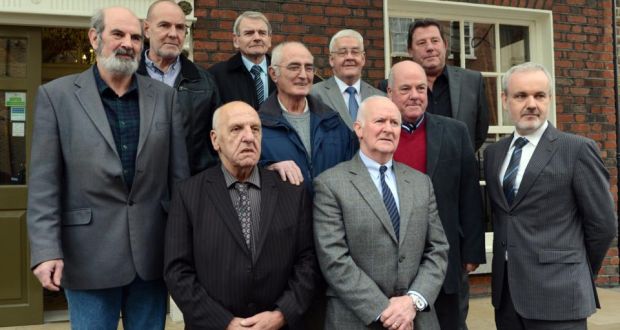
The European Court of Human Rights has rejected  a request by 14 men to declare they  were tortured in Ireland by the authority of the British Government. This decision was made with  one judge disagreeing.
Image result for the hooded men


The United Nations in 1975 made a Declaration that it is our Human Right not to be subjected to torture, but added, " or to punishment or treatment  that is cruel, inhumane or degrading".

That  addition, helpful though it seems, made it possible for governments to admit they inflicted inhumane and degrading punishment, but to escape being internationally labelled torturers with whatever penalties, if any,  that might bring.  

The British government made use of this , admitting  cruel treatment in Ireland but not  torture. It reminded us of neighbours  who, when faced in court with, say, five  charges  are advised  to plead guilty to the smallest  one - which he or she did not do  -  in the hope of  avoiding a  guilty verdict  on  the larger ones , on which they would probably get a guilty verdict anyway.

 In 1971 a British government spokesperson said there was no torture unless the person who did it took pleasure in doing it. This principle, which seem like something out of a sexual morality pamphlet, enabled people like General Massu in France to say that while he favoured torturing prisoners  in the Algerian war of the nineteen fifties he regretted having to do it, so it was all right  - apart from that he offered little excuse for  his part  in the  military torturing of that war.  He could hardly have pleaded, as present-day governments do, that torture is all right  if it produces results. He and his colleagues succeeded in losing  the war. As torturers tend to do.

In 1997, a group called Christians Against Torture published a Report  in which they included Northern  Ireland under the heading of places where torture was done, even though the examples they quoted were less severe than what was  inflicted on the 14 Irish men whose application for a verdict recognising they were tortured  has been refused for the second time.

So on the one hand governments  have an excuse the UN  left open to them,  on the other  is the clear human belief that torture, as Chambers Dictionary puts it , is " the infliction of severe pain or mental suffering , especially as a punishment or as a means of persuading someone to give information". For the  millions of speakers of the English language that is what torture is - like pushing a prisoner out of a helicopter  - only inches above the ground - knowing that this will cause  unspeakable mental anguish for a prisoner who thinks he or she is about to be smashed to pieces for the family to take care of, if found. For the United Nations torture is one thing, cruel, inhumane, degrading treatment is another. But clearly "cruel, inhumane, degrading treatment" can be , and is,  severe  enough for even  the European Court of Human Rights to call it torture without offending their Grande Chambre up to which we are told  the Irish Government should  bring  the matter now.

Governments nowadays not  only excuse   torture but can publicly support its use in the future - if it produces "results". Sean Mac Bride was right when he called the extension of official torture in the world  an epidemic - that was more than half a century ago.

 As one of the 14 said, the European Community has refused  an opportunity to oppose governmental  torture . To help stop the epidemic.

 Brian Faulkner was the leading politician in Ireland's northeast who insisted on internment without trial in 1971.  The  war in Algeria,  fought  in the nineteen fifties, had provided a pattern of what happens when the military are given control over what would normally be police functions. The military in Algeria took control of police barracks, seized police files many of which were out of date, and acting upon these made many arrests and tortured many of the people arrested . The pattern  in N. Ireland was inevitably similar. Either Mr Faulkner knew what the consequences of his insistence on internment would be in a militarily controlled situation - or he did not. If he knew, then his insistence on internment was even more corrosive than we have ever admitted, insisting on a measure  whose consequences he knew  must  be disastrous. Internment  on military terms  did not mean just putting people in jail without trial or even charge - it meant torture as well for many of them. The Algerian experience was not ancient history, it was during Mr Faulkner's time. If in that case he did not know the consequences of what he insisted on, this  must be  incompetence or cynicism or both.  

The United Nations can at times be too anxious to satisfy some  people's  demands at  other people's expense.

In France  significant public discussion occurred - even among their military - about official French government torture. In 1972 Jules Roy who had begun his career in the military wrote a powerful condemnation of General Massu. Another French general, Bollardiere, condemned their official torturing and  engaged , to his cost,  in public dispute with  Massu about what their government was responsible for. 

There was no comparable dispute or public row in Ireland or Britain. Governments  successfully diverted the  argument, such as it was, away from the suffering of real people being really tortured on to the demands of "national security" and getting "results" and to the false distinction between torture and cruel, inhumane and degrading treatment .

 Which unfortunately is much the same thing.

Wednesday, 14 March 2018

Saint Patrick's Day


May we have a very Happy March 17th., St. Patrick's Day.

Celebrating ,  thinking what kind of Ireland Patrick helped to create,  wondering what  kind of Ireland he came into in the first place.

We can manage the celebrating  without much bother, to the sight of  marching - or dancing - feet and the sound of pipes.  What kind of Ireland Patrick left us with when he departed to his reward,  we will be  reminded of that if we  go to church.

Which leaves the question - maybe the most important question of all - what  kind of Ireland did Patrick come to when he was  dragged here unwillingly, having to  escape from us by his  adventurousness and probably a few safe houses along the east coast ?  Whatever he thought of us then, he  came back to Ireland because he believed   these Celtic people were too precious  not to believe in the One God he believed in.

The Ireland Patrick had been dragged into was a structured and naturally developed society. The Celts had been one of the most powerful  people in Europe, challenging Greek and Roman,  so powerful that Julius Caesar had to kill a million of them in an eight year campaign to get his troops to invading  distance of Britain - a campaign glorified until recently by educationalists who might have known better.  Patrick learned so much  about our people's laws, customs and history that he and his followers  collected the laws, listened to the oral histories of the people and wrote  down both - of course they put in Christian bits and removed some non-Christian bits but Irish laws, oral history and customs that had been  passed on through generations survived. The laws were more humane than, for example,  those of Hammurabi  that are reflected in the Mosaic laws and were concerned with everyday living from royalty to bee-keeping, from ill-doing to the care and maintenance of invalids.  The Celts put great value on remembering rather than writing, cultivating memory as enthusiastically in their day as we are de-skilling ourselves of it in ours. At Festival times they reminded each other of what their laws were, decided who was keeping them and who was not, who should be leaders  and what should be done  about  all of this.  It was a very sophisticated law system within which there were families recognised as skilled in law, medicine, spirituality.

Patrick left two letters  that give us a glance - an annoyingly slight glance - into his life experiences, making little of himself but proud of his converts, fiercely angry with  a wretched man called Coroticus  who captured and sold some of them, and Patrick himself paying money  for permission to cross  borders between one clan territory and another in his campaign of conversion. In one of the letters he called us a barbarian race, although  we had laws and customs and social organisation that influenced every part of our lives. His trouble was that he  had been  brought up in a culture obsessed with the idea that there  must be  a perfect man, woman and  society and your governors   knew what shape these all were , so  everyone had better be pushed into that mould or perish. The Irish system and belief, though, arose up from the land  and the people on it, morality was based upon what nature and neighbours need, or need to avoid,  more concerned with restoring the dignity of a person offended than  with punishing the offender.

Patrick  respected  the Irish landscape too, so  he and his followers gradually nudged their way past the Druids - the ancient intellectuals in Celtic Europe  and Ireland - and treated our mountains and  wells and growing things as sacred, just as the Druids had done. Our reverence for the mountains and the wells and the healing  herbs still has a pleasant  mingling of Christian and Druid in it.

But all was not sacred, all was not a gentle passing of the religious , spiritual baton from Druid to Priest in ancient Ireland. There were conflicts before and after, but  less religious bloodletting than we might expect.  Ireland had its internal and external battles before  and  after Patrick. Because the people  relied more on memory than writing, what happened in Ireland was recorded by people in their remembered stories  passed down  generation by generation, stories of their history, real and imagined but always with truth embedded in it. Patrick's  followers in years after him wrote down the laws  with their exact directions for communal life and the folk stories with their particular and precious form of truth. 

The folk memory of Irish battles long ago was  just as valid an echo  of  past realities in Ireland as Homer's stories or Biblical stories were for their generations.

For that thought one of the people we can thank is Sean Mc Mahon who among his many wonderful books wrote one  entitled  " Battles Fought on Irish Soil -  A Complete  Account" (Londubh Books, Dublin 2010). This book includes a short account of the pre-Christian, folk-remembered,  two battles  of Moytura  and the Battle at the Ford. Patrick, if he had an ear to hear, would have spent lonely times hearing these stories around someone's fireside just as the Greeks learned their old stories around theirs. Sean Mac Mahon writes : " The earliest orally preserved belief was in a series of magical invasions, with each indigenous people falling victim to or being enslaved by successive new -comers. This may indeed describe in folk memory the reality of the country's past. As such it is as tenable a lore as Homer's Iliad was of  Ionian battles long ago......".  Patrick would have experienced the value and the beauty , the dangers and the faults but in both he  saw what he believed his God would find  enriching and redeemable. And so, not because  he is a world renowned saint, but because he learned what the Irish race is about , he reverenced our past while he  tried to mould our future.

And by the way, when he said we were a barbarous race he was using that awful word because of the culture in which he was reared.  The Greeks and Romans - and many people whom they invaded - called people who  did not speak their language barbarians, no matter how civilised they were  - they said they could only talk bar-bar-bar.  Like some Agatha Christie characters  equipped only with English stepping  off a bus in Delhi hearing  what,  in their unknowing ,  sounds to them like a babble of voices,  bar-bar-bar, from people whose language is a  thousand years older than their own.

We think of Patrick not just because of  what we  became after him,  but  because it helps us understand  what we were before he  even  got here.

(Reminder note about some of the ancient Irish laws : Bees - when you start keeping bees you give four nearest neighbours pledges against their doing any harm. After three years without complaints the neighbours each get a swarm of bees and become  beekeepers themselves if they want to.

Invalids: If you injure someone he or she is to be tended at home but if after nine days is still not recovered you are liable for maintenance , lodging and medical expenses.

There are complications and variations in the laws, so  "A Guide To Early Irish Law"  by Fergus Kelly , first published by the Dublin Institute for Advanced Studies  in 1988 and later reprinted, will help.)

Thursday, 8 March 2018

International Women's Day


Former  President of Ireland  Mary Mc Aleese made a strong statement for International Women's Day about the Catholic Church and its official attitude to women.

The R. Catholic Church was and to an extent still is one of the most influential  bodies in the world. It should be forward in recognising human rights, dignity and potential.  Both Men and Women  should be - by right - in every place at every level in the Church where decisions are made. Religious  belief decisions, financial decisions, all decisions.

Both  men and women  should  be  at every level in all the churches'  work of creating and sharing  their  service to all people , including the work of all the "holy orders" of the church from  caretaker to priesthood and wherever leadership is to be. No question. Either we want the divine gifts of all our people to be  shared and enjoyed by all of us or we don't. If we do, let us get on with it.

In a sense we have been getting on with it for a long while.  Crab-like, believe it or not.

 Look at this for instance:

There were  times and places in which women were not allowed to sing in church - and some powerful people did some weird  things to make sure they wouldn't.  Then some genius got the great idea of having a window in a wall between choir and  everybody else so women could sing their hearts out through that. Then another great idea arrived,  that women could come forward  and let's hear the beautiful  voices in full glory - but in a balcony so as not to be looked at and maybe distract one and all. 

When the ancestors of us ordinary folk  were granted seats in church - and it took a while  for them to get that far  - it was decided eventually that standing together, men and women,  and therefore mingling, was not prim and proper at worship, so women should be  on one side of the congregation and men on the other.  Unmingling as it were.

In many parts of Ireland for centuries our ancestors had to worship in the open air, and then, when by leave of landlords and suchlike, churches were  built, they had  standing room  only, so a lot of mingling occurred. For some reason de-minglification lasted rather long in Ireland, right through half the lifetimes of us very elderly folk but now women can sit more or less where they like. Not usually in the sanctuary of course.  

Meanwhile  the approach - at crablike pace - of women towards equal place nearby  our altars was going on. Women were eventually allowed to read the sacred Books - the Bible - to our congregations, but only "if there was no suitable man available" and only outside the altar area, the sanctuary. Inch by inch however this unstoppable journey  step by step was happening. Then we took away the rails separating congregation from priest and  so women  now read happily from The Books and assist the priest in some acts of worship - inside the sanctuary.

It all took such a long, long time. But, then, it took a long time for women to make their slow approaches into the law courts and towards the judge's  benches. A long time for women  even to get voting, or into universities , longer still to get into representational politics, upwards even in trades unions, years and years, step by step, hurt by hurt. It took a long time for such a  slow step by step  movement to bring women into decision-making in business  and  into sharing all their genius in  literature.

So what did the Church do that everybody else was not doing in this unwillingness to invite  women to where they were needed as much as - sometimes more than - anyone else?  Trouble with the churches is that we expect better of them. More concern for human dignity, more concern for human rights, more concern - even if only for our own churchy reasons - for enriching ourselves with the wit and wisdom not of some members of our  churches but of all of them.

So the slow movement of women towards the altar in the R. Catholic church has been step by weary step. It's a pity the end point of this pilgrimage is not being hastened by  discussion and consent among  all of us rather than  just giving in to the inevitability of a place  for women at the altar as priests, an ending that people in high places tried to prevent and people in  humble places are going to make real.

Dr Mary Mc Aleese talked , as well she might, of officialdom in terms of misogyny.

But there is another element - fear.  Fear of what is to come -- whatever will it be?

I hesitate to do it but I will do it nevertheless, some might call it my dream, others  my nightmare, but I prefer to call it my harmless dream. The journey of women towards the sanctuary in our Church has been long and is still unfinished ....yet.......because of  a  future feared rather than a future faced........but future has its own inevitabilities.........

So imagine .  It is Christmas Day ... approaching noon.....St Peter's Square, tens of thousands of people waiting for the Pope to bless the city and the world,  blessing Urbi et Orbi..... murmurings swell , then die away as the clocks chime.... the Pope  comes out on the balcony , the cheers ....the silence. ....the silence of expectancy....what will  the pope say to enliven our faith and hope......"

And the pope, arms upraised begins to speak in welcome and prayers..

And the Pope's first words are :

"My husband and  I........ "

Thursday, 1 March 2018

ULSTER SCOTS, LANGUAGE OR DIALECT?


One of my clerical colleagues told me a story.  A good story, short, beautifully told. About two youngsters in North Antrim  mitching  from school.  They had their day out but wanted to get back into school before closing time. On their way back  one of them fell into a ditch. My friend told the story  so well that when  I met him in North Antrim  I  would ask him to tell the story again. Being a Belfast yin I could not tell it the way he did.  All I could say that sounded even like it was the end of the story where  the youngster who hadn't  fallen into the ditch rushed up to the school to tell about the accident. He goes into the classroom all excited and says , "........Hey  Maister, wee Johnny hae couped i ' the sheugh an' he's up  tae the houghs in glaur...."

Local dialect like that is better  spoken than in print. But some writers have  made a  brave attempt to write in it. Paidric Gregory  an architect of many churches in Ireland and abroad, and a composer of many verses in homely local dialect was one.   About the same time as my clerical colleague was telling me his story Gregory  was publishing a book in Belfast called "Ulster Ballads" (published  by Mullans, Belfast, in 1959).  One of the ballads was entitled , "What I Heard in a Country Grocery Store:

Ach, how're ye Rab, Troth I'm wet clane thro'

God knows  'twas a tarr'ble dhreep o' a day.

Gi'es a half-yin o' yella whuskey - nate !

I'll need it tae help me up 'Vogie Brae.......

Professor Estyn Evans of Queen's University ,  Chairman of the Committee on Ulster Folklife and Traditions wrote a  Preface to Gregory's  book :  "Here the reader will find the lore and the wisdom of past ages distilled in verse , flavoured with the tang of a strong regional tongue and shot through with quiet  humour.  Whatever the subjects , the folklorist and the student of dialect will find in these poems material of value to them".

Another  author writing in Ulster Scots and not widely known now was Archibald Mc Ilroy, who also lived in Belfast. One of his books was a collection of short studies entitled  "The Humour of Druid's Island", published in 1902 also by Mullans.  The Druid's Island of Mc Ilroy's imagination was set in County Fermanagh.  One of his Druid's Island characters, Geordie , refuses to have  chloroform  in his leg operation :  "........ a  intent' tae watch what goes on. Why man, ye micht hae leg an' a' awa' wi' ye whun a got waukin't up".   Mc Ilroy writes in the Preface to this collection : " We  in Ulster are very proud of our unique dialect...We have a supreme contempt for poor creatures who have nothing to fall back upon but the pure English tongue".  

For many of us the  Scots dialect probably means  Robbie Burns but  in recent years there has been  a reaching out towards  a more extensive audience  in  Scotland and Ireland .

In 1992 The Saltire Society - an association founded in 1936 to promote aspects of Scottish culture and development - published  "Tales Frae the Odyssey O Homer Owerset  Intil  Scots"  by William Neill.  In his  Introduction ('A  Ward Anent This Buik' ) William Neill remarks that these tales    "... hae been telt tae the auncient Greeks lang afor... scrievit doun ..... " and makes a vigorous defence against the idea that  "...Scots is no a leid (language)but a 'mere dialect'.....".

You  can see in Neill's book his resentment against, as he puts it,  the  "cockapennies  ettlin (trying) tae yird (bury) "  Scots as a dialect rather than a language.  

Dialects are not languages but develop within  languages, sometimes because of mingling , sometimes because of isolation.  The Irish language has Ulster, Connaught and Munster dialects;  English has dialects in Scotland and England,  other European countries have  standard language and local patois.   Sometimes local dialect is indeed looked down on for instance  it took a long time for the BBC  to allow  local dialects  to be spoken in its programmes. But we need not be too hard on them for that because even after the great French Revolution the new regime tried to standardise the French  language by the elimination of local dialects, so  that  is what  "cockapennies " of whatever nationality do.

Coisceim , producer of beautiful Irish Language books of many shapes, titles and sizes, published a few years ago a guide to  words, phrases and usages of Ullans,  Ulster Scots.

Whether a  particular way of speech like this is a  language or  a dialect  is often , and sometimes hotly, disputed. One of the dangers of trying to promote a dialect into a language is that, in the  haste to  do it,  we may end up with little more than the  existing dominant language spoken or written with too much of  the same with local variations and in  different spelling  and accent and saying this is a language in its own right.    

And that does nobody's dignity  - or enjoyment  - much good.

Ulster Scots deserves a better fate than that. But for political reasons there's a danger of it.

Friday, 16 February 2018

John,Victor, Terry.


Another good friend has left us, Dr John Robb who died this week.  

John belonged proudly to a great Presbyterian  liberal tradition. In his writing and conversation he shared so many ideas about medicine, education, politics. His vision of the life we could enjoy together was brilliant and always mindful of the potential all our people have for making such a vision normal for everyone, developing and enlarging our potential for greatness.

An example of quiet courage, courageously shown when we so much needed it, John  sponsored the Mac Bride Principles of Fair Employment along with Inez Mc Cormick and Brian Brady and thus enabled   Oliver Kearney and other courageous people to hasten the creation of fair employment laws for everyone.

We used to meet in the Olio Restaurant , not far from the spot  where courageous  Presbyterian merchants in Belfast long ago threw out in disgust a proposal for Belfast to make money by organising its  own slave trade.   John Robb, Victor Hamilton, another friend who remembered his liberal Presbyterian tradition with pride and hope, historian and scholar in many languages, one of those citizens who helped us to hope that Belfast would be recognised once again for its humanity and learning, and Terry Donaghy who would visit different places of worship - and places of different worship - week by week in grateful   recognition of this shared inheritance of ours .  Terry died near the City Hall at the end of a walk for peace.

Terry and Victor and John have been good to us and we are grateful.

Monday, 12 February 2018

A PRESIDENT STEPS DOWN


I have known Gerry Adams  for more than half my lifetime.

Now when he has stepped down from Presidency of Sinn Fein  I wish him well, as he has wished myself and many other friends well.  His advice and experience will remain a treasure in his Party and outside it.
 I have seen  the interplay of forces between  different "social classes" in which a nationalist politician  advised British interested parties that Gerry Adams could not write his own speeches and had to get a priest to do it for him. I have  seen how almost every initiative for peace that I was associated  with was  either cold-shouldered or opposed by people who wanted peace but believed some classes of people could not  make peace  and had to be presented with it as if it were a gift possessed by those who had lots of material gifts already and therefore were, so to speak,  a peace- making class of some kind. Peace without change was theirs to allot.
People have said , especially in contrasting Gerry Adams with Martin McGuinness, that Gerry was remote and unapproachable - this from people who refused not only to talk, but even to listen to him.
People talked about a past military "baggage"  who seemed to believe peace was only to be got by discrediting  opponents  rather than exploring each others'  minds .
When we were struggling for employment in West Belfast Gerry Adams supported peaceful efforts which others condemned. When people were travelling to Ireland, Britain, Continental Europe, Canada, the  USA,  asking support  for Principles of fair conduct to ensure fair employment for our neighbours we were opposed in public and in private by representatives of political parties, churches, diplomatic officials. Gerry Adams supported our efforts for Peace Through Equality.  The best we   were offered officially was equity - where the master treated all the servants with equal reward and punishment.  That is not equality. We had the humiliation of listening to representatives even of our own churches saying these principles of fair employment would prevent investment in N.Ireland. The truth was that with such principles for the first time in our history we could assure investors that  they could now find workers in Ireland all of whom were appointed on ability to do the job rather than membership of secret organisations. In other words we  promised efficiency.  Some important people wanted the defeat of republicans more than the prospect  of efficiency. 
Time and time again people like Father Alex Reid asked church and other leaders to get those in conflict around the table - they had nothing to lose, everything to gain - to talk to  and with them . They refused , saying that to talk to "them " would "give  them status". 
They had not accepted that   the vote of the people gives representatives status  - that principle was abandoned along with the other principle that no-one can be said to have broken a law unless and until proved to have done so beyond reasonable doubt -- a   principle being broken almost every day still  by those who accuse others of being lawless ,whether with evidence or not.  
I was content but surprised to see  lines of political people, who would not have allowed Martin McGuinness to speak,  reverently attending his funeral, and  clergy many of whom would have supported politicians and media  in that  boycott. It took a long time to persuade such people that to despise the people's representatives is to despise the people who choose them but eventually the message had to be heeded by some of them.
The support Gerry Adams  gave to peacemaker Father Alex Reid was important especially when many other people  said  Alex was being  naive and manipulated. Gerry Adams knew well that people like Alex went  talking to members of the Red Hand Commandos, the UDA, the UVF, politicians , church officials, SDLP,  anybody willing to talk and listen, all to help people find reasons to share  respect for people who  were their neighbours.
The first time I saw Gerry Adams on a public platform was when he addressed a school hall full of young people after riots in the street . He calmly and assuredly told them that rioting in the street was not going to make life better for  them or any of us , but organising , becoming one together and learning the reason for what was being done to us would set us on the way. During many years West Belfast was one of the few places where all the political parties, all the churches, pacifists like Dan Berrigan , Herman Verbeek , representatives of people engaged in political struggles elsewhere in the world were invited by the residents to speak  with them . West Belfast  probably learned more about oppressive politics , helpful and unhelpful  leadership and their own potential   than  people in most other cities did.  But they had to do it in face of cold-shouldering and even  opposition from those who could and should have helped. 
Those who helped were appreciated, and if politicians, voted for.
I have never believed in the existence  of " physical force republicanism".  In republican history military action came after years of effort to create fair government , even on terms dictated by those who ruled  unjustly ; if military action had to come it had to  be a last resort not a first one. For those who conquered other countries into bad government and created  empires military force was a first resort not a last one.
I  have  remembered that many times while watching the painful struggles from peace into war and from war into peace.
When August 1969 came and whole streets were burning and war came - not "Troubles" but war by any standard - I believed and still believe that for the police, military and politicians who made those  attacks, this, along with  the ensuing thirty years war was to be their Final Solution.
For those who flung up barricades and hurled stones and faced into the thirty years war - not "Troubles" but war by any standard - this was their Last Resort.
The war was between the Final Solution and the Last Resort.

To lead people into war is easy. Mr Blair did it. Mrs Thatcher did it. Hitler did it.

To lead people from war into peace is difficult and often opposed by nice people .

Martin McGuinness led from war into peace. So did Gerry Adams .

Most people in Ireland and Britain, apart from a courageous few, stood aside and  refused even to admit  what the conflict was about.….......

So we know whom to blame for the war. And whom to thank for the peace.